
DHARAMSHALA

Dharamshala, a place that always feels like home, is a charming destination with beautiful views of the Dhauladhar range that towers above it. Divided into the main town and the culturally vibrant Mcleodganj, Dharamshala is a major centre of Tibetan Buddhism in exile. The pleasant weather, breathtaking views and the Boho influence come together as an experience you carry with you throughout life.
loader-image
Dharamshala
Dharamsala, IN
3:58 am, Jun 6, 2026
temperature icon 17°C
clear sky
Humidity: 59 %
Pressure: 1009 mb
Wind: 10 mph
Wind Gust: 7 mph
Clouds: 0%
Visibility: 10 km
Sunrise: 5:18 am
Sunset: 7:28 pm
  • Temperature
  • Precipitation
  • Rain Chance
  • Wind
  • Humidity
  • Pressure
5:30 am
temperature icon
16°/17°°C 0.2 mm 20% 10 mph 59% 1009 mb 0 mm/h
8:30 am
temperature icon
21°/23°°C 0 mm 0% 4 mph 47% 1009 mb 0 mm/h
11:30 am
temperature icon
27°/27°°C 0.2 mm 20% 10 mph 37% 1009 mb 0 mm/h
2:30 pm
temperature icon
24°/24°°C 0.7 mm 70% 3 mph 44% 1007 mb 0 mm/h
5:30 pm
temperature icon
26°/26°°C 0.65 mm 65% 6 mph 36% 1005 mb 0 mm/h
8:30 pm
temperature icon
21°/21°°C 0 mm 0% 10 mph 48% 1008 mb 0 mm/h
11:30 pm
temperature icon
20°/20°°C 0 mm 0% 10 mph 49% 1009 mb 0 mm/h
2:30 am
temperature icon
19°/19°°C 0 mm 0% 10 mph 47% 1008 mb 0 mm/h
loader-image
Dharamshala – Mobile
Dharamsala, IN
3:58 am, Jun 6, 2026
temperature icon 17°C
59 %
1009 mb
10 mph
Clouds: 0%

Everything

Main areas

Treks | Hikes

Monasteries

Temples

Other sites

HPCA Stadium

Inaugurated in 2003, the HPCA stadium, widely known as the highest cricket stadium in the world, rests at 1,457 metres above sea level.

The mesmerising backdrop of the Himalayas never ceases to amaze, whether you’re there or at home watching the match on TV. The HPCA stadium is known to assist fast bowlers and hosts high-profile international and IPL matches every year.

Norbulingka Institute

Home to Tibetan refugees in exile, the Norbulingka Institute preserves and promotes Tibetan art through self-sustaining means. With its peaceful, garden-like environment, the institute features temples, workshops, a museum, a café, and a doll museum showcasing Tibetan life.

Both a working institute and a tourist attraction, it offers visitors a chance to see artisans at work and experience Tibetan culture firsthand.

Gyuto
Karmapa
Monastery

Re-established in India and inaugurated in 1996, after the Chinese invasion of Tibet in 1959, the Gyuto Tantric Monastery is one of the most renowned Tibetan monasteries.

The Gyuto Monastery specialises in the study of Tantric meditation, ritual arts and Buddhist philosophy. Known for its beautiful temple complex, large Buddha statue and peaceful surroundings, it offers visitors a glimpse into Tibetan monastic life and spirituality.
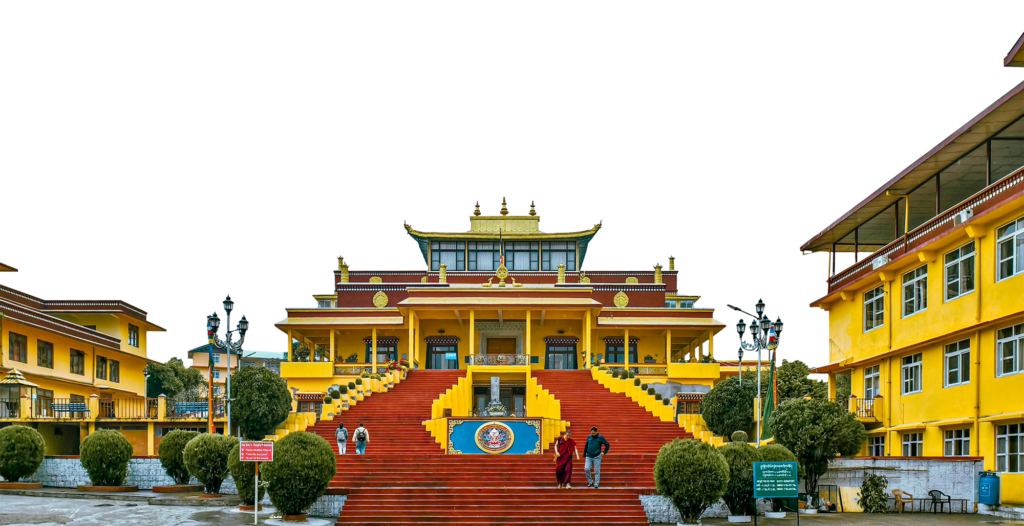
The library, which is open to all who seek knowledge, is a beautiful and peaceful space where anyone who is interested may sit and read for hours.

Gyuto Karmapa Monastery

Re-established in India and inaugurated in 1996, after the Chinese invasion of Tibet in 1959, the Gyuto Tantric Monastery is one of the most renowned Tibetan monasteries.

The Gyuto Monastery specialises in the study of Tantric meditation, ritual arts and Buddhist philosophy. Known for its beautiful temple complex, large Buddha statue and peaceful surroundings, it offers visitors a glimpse into Tibetan monastic life and spirituality.

The library, which is open to all who seek knowledge, is a beautiful and peaceful space where anyone who is interested may sit and read for hours.
Aghanjar Mahadev Temple [ image on the left ]
The Aghanjar Mahadev temple, a sacred shrine to Lord Shiva situated right next to the beautiful Manuni Khad, is a temple every bit worth its renown in terms of both beauty and legend. According to local belief, it is here that Lord Shiva revealed himself to Arjuna during his quest for victory against the Kauravas in the ancient epic Mahabharata.
 
The temple offers a deeply peaceful setting for reflection and prayer and is an ideal spot for those seeking a spiritual retreat away from the usual tourist swarms.

The Kunal Pathri Temple is a sacred shrine dedicated to Goddess Durga resting amidst dense pine forests. Though not officially recognised as one, it is often revered and regarded as a Shakti Peetha by the locals who have believed for ages that this is where a part of the Goddess Sati’s skull fell. The temple’s calm, almost untouched charm is also what attracts devotees.

The Indru Nag Temple is a shrine dedicated to the rain god Indru Nag and holds deep religious significance to the locals, who believe it protects the region from devastating heavy rains. The hill offers an unobstructed and beautiful view of the main town of Dharamshala below. Popular for peaceful sunsets, paragliding takeoffs and glamping (glamorous camping), it’s an ideal escape for those seeking calm, views and a touch of local spirituality.
Aghanjar Mahadev Temple [ image on the top ]
The Aghanjar Mahadev temple, a sacred shrine to Lord Shiva situated right next to the beautiful Manuni Khad, is a temple every bit worth its renown in terms of both beauty and legend. According to local belief, it is here that Lord Shiva revealed himself to Arjuna during his quest for victory against the Kauravas in the ancient epic Mahabharata.
 
The temple offers a deeply peaceful setting for reflection and prayer and is an ideal spot for those seeking a spiritual retreat away from the usual tourist swarms.

The Kunal Pathri Temple is a sacred shrine dedicated to Goddess Durga resting amidst dense pine forests. Though not officially recognised as one, it is often revered and regarded as a Shakti Peetha by the locals who have believed for ages that this is where a part of the Goddess Sati’s skull fell. The temple’s calm, almost untouched charm is also what attracts devotees.

The Indru Nag Temple is a shrine dedicated to the rain god Indru Nag and holds deep religious significance to the locals, who believe it protects the region from devastating heavy rains. The hill offers an unobstructed and beautiful view of the main town of Dharamshala below. Popular for peaceful sunsets, paragliding takeoffs and glamping (glamorous camping), it’s an ideal escape for those seeking calm, views and a touch of local spirituality.

Kharota

Upwards from Khanyara town and not far from Aghanjar Mahadev, Kharota is where stepped fields, open skies, and the majestic Dhauladhar peaks come together in perfect harmony. Far from the tourist bustle, it offers a slower, more grounded experience of the hills, ideal for soaking in the raw beauty of rural Himachal. The Thatharna Trek, which is significantly harder than Triund, also begins here.

MCLEOD GANJ

loader-image
McLeod Ganj
McLeod Ganj, IN
3:58 am, Jun 6, 2026
temperature icon 17°C
59 %
1009 mb
10 mph
Clouds: 0%
A popular tourist destination, Mcleodganj or McLeod Ganj is roughly 300 – 350 metres higher than Dharamshala City and is often fondly called “Little Lhasa”. The seat of the 14th Dalai Lama, Mcleodganj has a heavy Tibetan influence reflected in its monasteries, prayer flags and very evident architectural elements.

The town offers a rich and varied experience, from cafe hopping, shopping in the local markets, visiting spiritual landmarks or setting out on scenic trails that lead to breathtaking natural spots with stunning views and gurgling brooks. Striking a perfect balance of energy and calm, the town inspires quiet reflection and cultural exploration among other things.

MCLEOD GANJ

A popular tourist destination, Mcleodganj or McLeod Ganj is roughly 300 – 350 metres higher than Dharamshala City and is often fondly called “Little Lhasa”. The seat of the 14th Dalai Lama, Mcleodganj has a heavy Tibetan influence reflected in its monasteries, prayer flags and very evident architectural elements.

The town offers a rich and varied experience, from cafe hopping, shopping in the local markets, visiting spiritual landmarks or setting out on scenic trails that lead to breathtaking natural spots with stunning views and gurgling brooks. Striking a perfect balance of energy and calm, the town inspires quiet reflection and cultural exploration among other things.

loader-image
McLeod Ganj
McLeod Ganj, IN
3:58 am, Jun 6, 2026
temperature icon 17°C
59 %
1009 mb
10 mph
Clouds: 0%

Namgyal Monastery

Re-established in Mcleodganj in 1960, Namgyal Monastery is the personal monastery of the 14th Dalai Lama. Another name for this temple-complex is Namgyal Tantric College. The monastery’s key role is to assist with rituals involving the 14th Dalai Lama, Lhamo Thondup of Tibet. The complex where the monastery is located, also houses the Tibet Museum where various Tibetan crafts and historical depictions are on display.

Kalachakra temple

Built right in the Main Square of Mcleodganj in 1992, the Kalachakra Temple is a sacred Tibetan Buddhist temple known for its Tibetan murals and spiritual significance. Located near the residence of the Dalai Lama, it is closely associated with Kalachakra teachings, which aim at achieving “Buddhahood“. Decorated with prayer wheels, the temple is frequented by tourists who spin these wheels to accumulate good karma and spread blessings to all beings.

St. John in the Wilderness

Amidst the towering deodar forests just before Mcleodganj sits St. John in the Wilderness, a charming neo-Gothic church that exudes old-world serenity. Built in 1852, its stone structure, stained-glass windows, and quiet surroundings create a timeless, almost mystical atmosphere.

Home to the memorial of Lord Elgin, a former Viceroy of India, the church is a survivor of the 1905 Mega Earthquake when it’s bell tower was destroyed.

Naddi (Dal Lake)

Far removed from the rush of city life, Naddi offers uninterrupted views of the majestic Dhauladhar range. Famed for its glowing sunsets and laid-back charm, it is the perfect spot to unwind, breathe in the crisp mountain air, and truly slow down & recalibrate.
Just a short distance away from Mcleodganj, the serene Dal Lake is ideal for leisurely strolls, quiet moments, & picture-perfect memories with friends and loved ones. An evening hot coffee with a steaming plate of momo here, especially during winters, is just…unforgettable. 
As if this wasn’t enough, the Dharamshala International Film Festival (DIFF), held every October–November, brings a unique cultural buzz to this otherwise peaceful retreat, offering yet another reason to visit.

Naddi (Dal Lake)

Far removed from the rush of city life, Naddi offers uninterrupted views of the majestic Dhauladhar range. Famed for its glowing sunsets and laid-back charm, it is the perfect spot to unwind, breathe in the crisp mountain air, and truly slow down & recalibrate.
Just a short distance away from Mcleodganj, the serene Dal Lake is ideal for leisurely strolls, quiet moments, & picture-perfect memories with friends and loved ones. An evening hot coffee with a steaming plate of momo here, especially during winters, is just…unforgettable. 
As if this wasn’t enough, the Dharamshala International Film Festival (DIFF), held every October–November, brings a unique cultural buzz to this otherwise peaceful retreat, offering yet another reason to visit.

DHARAMKOT

loader-image
Dharamkot
Dharamkot, IN
3:58 am, Jun 6, 2026
temperature icon 15°C
61 %
1009 mb
10 mph
Clouds: 0%

Just a short walk or a cab ride beyond Mcleodganj lies Dharamkot, a quiet hillside retreat known for its bohemian charm and hep café culture. Offering a laid-back vibe with cosy cafés, yoga retreats, and scenic forest trails, its is very popular among backpackers and slow travellers.

With the Triund trek starting nearby and beautiful crimson and golden sunsets, Dharamkot is a great place to unwind, reconnect, and let the mountains set the pace. A variety of cultural workshops, from art and music to meditation, offer exquisite experiences to make every stay truly memorable.

DHARAMKOT

Just a short walk or a cab ride beyond Mcleodganj lies Dharamkot, a quiet hillside retreat known for its bohemian charm and hep café culture. Offering a laid-back vibe with cosy cafés, yoga retreats, and scenic forest trails, its is very popular among backpackers and slow travellers.

With the Triund trek starting nearby and beautiful crimson and golden sunsets, Dharamkot is a great place to unwind, reconnect, and let the mountains set the pace. A variety of cultural workshops, from art and music to meditation, offer exquisite experiences to make every stay truly memorable.
loader-image
Dharamkot
Dharamkot, IN
3:58 am, Jun 6, 2026
temperature icon 15°C
61 %
1009 mb
10 mph
Clouds: 0%

BHAGSUNAG

Just a 10-minute walk from McLeod Ganj, lies Bhagsunag, a tiny tourist hub that is bountiful in spirituality, nature, and a relaxed café culture. At its heart lies the ancient Bhagsunag Temple and, a short hike away, the Bhagsu Waterfall, where a little dip and a shower feel especially rejuvenating during summers.

Bhagsunag temple & waterfall

The Bhagsunag Temple, a 5000-year-old shrine dedicated to Lord Shiva is known for its sacred water tanks and peaceful ambience. This temple is rather well known, and hordes of tourists and devotees flock to it every year. According to legend, this is the site of a battle between King Bhagsu and the serpent deity Nag, fought after the king attempted to steal water to save his drought-stricken kingdom.

A short hike beyond Bhagsunag Temple, leads to the stunning Bhagsu Waterfall, a favourite spot for both devotees and travellers seeking a refreshing escape into nature.

TRIUND HILLTOP

A scenic mountain ridge above Mcleodganj, perched at 2,850 metres, Triund offers a refreshing contrast to the town below. While Dharamshala buzzes with cafés, culture, and crowds, Triund is all about open skies and uninterrupted Himalayan views.
Short and beginner-friendly, this trek is perfect for those seeking quiet, closeness with nature and a touch of thrill. For trekkers with a bit more experience, the journey extends further to Lahesh Caves (3,500 m) and the towering Moon Peak (4,650 m), though we at WanderWhere highly recommend venturing beyond Triund with an experienced guide.

NOT TOO FAR FROM
DHARAMSHALA...

Kangra Fort

The Kangra Fort, also known as Nagarkot or Kot Kangra, is a historic stronghold roughly 20 km from Dharamshala. Sitting majestically atop a hillock, overlooking the confluence of the Banganga and Manjhi Rivers, the fort is estimated to be roughly 4000 years old and has also been mentioned in the ancient epic Mahabharata.
 
With towering walls and ancient gateways, the fort whispers tales of millennia of culture, battles, calamities and grandeur. Among the oldest and largest forts in India, having stood the test of time, including the 1905 Kangra mega-earthquake it stands as a testament to the region’s rich history and resilience.

Kareri Lake

High up in the Dhauladhar range lies the Kareri Lake, at an elevation of 2,950 metres above sea level. The journey, marked by untouched landscapes and rugged rocky mountains, is as captivating as the destination itself. Striking a perfect balance between adventure, solitude and verdant beauty, this trek begins either at Kareri Village or Salli Village, both of which are roughly a two-hour drive from Dharamshala.
 
The Kareri Trek is quite popular, especially with the locals, since it still retains all of its undisturbed, clean, natural beauty, and though it is beginner friendly, it is ill-advised to go it without help and directions the first time you visit, which is where Wanderwhere is happy to help!

Palampur Tea Gardens

Spread across the gentle slopes of the Kangra Valley, the Palampur Tea Gardens seem almost ornamental. These beautiful sprawling estates are where the famed Kangra tea primarily comes from. Visitors can stroll through neatly lined tea shrubs, breathe in the fragrant crisp mountain air and witness the quiet rhythm of life in the hills.

The gardens are more than just a perfect getaway; they are also an exposure to culture, something you can take away from. To further enhance the experience, there are charming cafes, tea tastings and even a museum that offers a glimpse into the history of tea cultivation in the region.

Bir | Billing

loader-image
Bir
Bir, IN
3:58 am, Jun 6, 2026
temperature icon 17°C
52 %
1009 mb
8 mph
Clouds: 6%

Known as one of the world’s premier paragliding destinations, Bir Billing offers both exhilarating adventure and natural beauty. With Billing as the take-off point and Bir the landing site, a glide above the valley is a surreal event that lingers long after it ends.

Apart from the thrill, Bir offers peaceful cafes, a laid-back vibe and also Buddhist spirituality, striking a curious balance between adventure and tranquillity. For those seeking more, there are scenic trails leading to the serene Bangoru Waterfall and a 14 km trek to Rajgundha that offers a rewarding journey through untouched Himalayan landscapes.

Barot

loader-image
Barot
Barot, IN
3:58 am, Jun 6, 2026
temperature icon 15°C
56 %
1010 mb
7 mph
Clouds: 4%

Like a bowl surrounded by mountains on all sides, Barot is a lesser known Himalayan retreat known for its enchanting appeal and tranquil charm. Dominated by dense forests, flowing rivers, and quaint villages that seem like they’re out of an old Pahadi painting, it is one of the more picturesque hill stations in India.

The word “escape” truly fits this place like no other since it feels, and in a lot of ways is quite isolated from the rest of the world. A calm retreat where simplicity and nature steal the show, trout fishing, riverside strolls and stargazing are top-tier activities one mustn’t miss out on.

Chamunda Devi Temple

The Chamunda Devi Temple is a deeply revered shrine dedicated to Goddess Chamunda, a fierce form of Goddess Durga who slew demons Chanda and Munda. Located along the banks of the Baner River, some 15 km from Dharamshala city, the temple attracts devotees and travelers alike, offering a soulful experience.
 
A trail starting from Jia Village further leads to Himani Chamunda, a remote shrine high up in the mountains for those seeking a more adventurous spiritual journey. Reached via an 8 km trek, at an elevation of 3,185 metres above sea level, it is extremely rewarding with breathtaking views, pristine surroundings, and a deeply soulful atmosphere.

Masroor Temple

Carved out of a single rock face, the Masroor Rock Cut Temple is a remarkable example of monolithic architecture, often referred to as the ‘Ellora of the Himalayas’. Dating as far back as the 6th to 8th century, these intricately sculpted temples are believed to be inspired by the Nagara style and are primarily dedicated to Lord Shiva, with carvings also depicting other deities.

According to legend, the Pandavas resided here during their exile and began constructing the temple, but were forced to abandon it when their identity was revealed, leaving the structure incomplete to this day. Despite its immense historical and artistic significance as a rare monolithic, rock-cut structure, the site maintains a lower profile compared to other tourist locations in Himachal Pradesh.

Jwalamukhi Temple

One of the revered Shakti Peethas, the Jwalamukhi Temple is dedicated to Goddess Jwalamukhi and stands apart for its unique form of worship. Instead of idols, devotees revere nine eternal blue flames that emerge naturally from rock fissures, believed to burn without any external fuel. It is said that this sacred site marks the spot where Goddess Sati’s tongue fell.

According to legend, Akbar, after failing to extinguish the flames, offered a golden umbrella in reverence, remnants of which are still associated with the temple.

Baijnath Temple

Built around 1204 AD, the Baijnath Temple is a classic Nagara-style Hindu temple located in the town of Baijnath near Palampur. The temple, renowned for its exquisite architecture and intricate stone carvings, very aptly signifies the region’s rich heritage.
 
According to legend, it is here that the demon king Ravana performed intense penance to please Shiva and was granted a sacred Shiva Lingam, which was eventually established at this very site. In a rare tradition, and out of respect for Ravana’s devotion, the festival of Dussehra is not celebrated in the town, imparting a very unique and fascinating cultural dimension.

Baglamukhi Temple

The Baglamukhi Temple in Bankhandi, Kangra (Himachal Pradesh), is a renowned, ancient siddha peeth dedicated to Goddess Baglamukhi, one of the ten Tantric Mahavidya goddesses in Hindu tradition.
Revered & worshipped for her ability to bestow strength and protection, the temple attracts devotees seeking victory over obstacles and negative forces from all over.
According to legend, it was here that Lord Rama worshipped Goddess Baglamukhi at the sacred fire pit (havan kund) to gain victory over Ravana, and was granted the divine weapon Brahmastra.

HPCA Stadium

Inaugurated in 2003, the HPCA stadium, widely known as the highest cricket stadium in the world, rests at 1,457 metres above sea level.

The mesmerising backdrop of the Himalayas never ceases to amaze, whether you’re there or at home watching the match on TV. The HPCA stadium is known to assist fast bowlers and hosts high-profile international and IPL matches every year.

Norbulingka Institute

Home to Tibetan refugees in exile, the Norbulingka Institute preserves and promotes Tibetan art through self-sustaining means. With its peaceful, garden-like environment, the institute features temples, workshops, a museum, a café, and a doll museum showcasing Tibetan life.

Both a working institute and a tourist attraction, it offers visitors a chance to see artisans at work and experience Tibetan culture firsthand.

Gyuto
Karmapa
Monastery

Re-established in India and inaugurated in 1996, after the Chinese invasion of Tibet in 1959, the Gyuto Tantric Monastery is one of the most renowned Tibetan monasteries.

The Gyuto Monastery specialises in the study of Tantric meditation, ritual arts and Buddhist philosophy. Known for its beautiful temple complex, large Buddha statue and peaceful surroundings, it offers visitors a glimpse into Tibetan monastic life and spirituality.

The library, which is open to all who seek knowledge, is a beautiful and peaceful space where anyone who is interested may sit and read for hours.

Aghanjar Mahadev Temple [ image on the left ]
The Aghanjar Mahadev temple, a sacred shrine to Lord Shiva situated right next to the beautiful Manuni Khad, is a temple every bit worth its renown in terms of both beauty and legend. According to local belief, it is here that Lord Shiva revealed himself to Arjuna during his quest for victory against the Kauravas in the ancient epic Mahabharata.
 
The temple offers a deeply peaceful setting for reflection and prayer and is an ideal spot for those seeking a spiritual retreat away from the usual tourist swarms.

The Kunal Pathri Temple is a sacred shrine dedicated to Goddess Durga resting amidst dense pine forests. Though not officially recognised as one, it is often revered and regarded as a Shakti Peetha by the locals who have believed for ages that this is where a part of the Goddess Sati’s skull fell. The temple’s calm, almost untouched charm is also what attracts devotees.

The Indru Nag Temple is a shrine dedicated to the rain god Indru Nag and holds deep religious significance to the locals, who believe it protects the region from devastating heavy rains. The hill offers an unobstructed and beautiful view of the main town of Dharamshala below. Popular for peaceful sunsets, paragliding takeoffs and glamping (glamorous camping), it’s an ideal escape for those seeking calm, views and a touch of local spirituality.

Kharota

Upwards from Khanyara town and not far from Aghanjar Mahadev, Kharota is where stepped fields, open skies, and the majestic Dhauladhar peaks come together in perfect harmony. Far from the tourist bustle, it offers a slower, more grounded experience of the hills, ideal for soaking in the raw beauty of rural Himachal. The Thatharna Trek, which is significantly harder than Triund, also begins here.

MCLEOD GANJ

loader-image
McLeod Ganj
McLeod Ganj, IN
3:58 am, Jun 6, 2026
temperature icon 17°C
59 %
1009 mb
10 mph
Clouds: 0%

A popular tourist destination, Mcleodganj or McLeod Ganj is roughly 300 – 350 metres higher than Dharamshala City and is often fondly called “Little Lhasa”. The seat of the 14th Dalai Lama, Mcleodganj has a heavy Tibetan influence reflected in its monasteries, prayer flags and very evident architectural elements.

The town offers a rich and varied experience, from cafe hopping, shopping in the local markets, visiting spiritual landmarks or setting out on scenic trails that lead to breathtaking natural spots with stunning views and gurgling brooks. Striking a perfect balance of energy and calm, the town inspires quiet reflection and cultural exploration among other things.

Namgyal Monastery

Re-established in Mcleodganj in 1960, Namgyal Monastery is the personal monastery of the 14th Dalai Lama. Another name for this temple-complex is Namgyal Tantric College. The monastery’s key role is to assist with rituals involving the 14th Dalai Lama, Lhamo Thondup of Tibet. The complex where the monastery is located, also houses the Tibet Museum where various Tibetan crafts and historical depictions are on display.

Kalachakra temple

Built right in the Main Square of Mcleodganj in 1992, the Kalachakra Temple is a sacred Tibetan Buddhist temple known for its Tibetan murals and spiritual significance. Located near the residence of the Dalai Lama, it is closely associated with Kalachakra teachings, which aim at achieving “Buddhahood“. Decorated with prayer wheels, the temple is frequented by tourists who spin these wheels to accumulate good karma and spread blessings to all beings.

St. John in the Wilderness

Amidst the towering deodar forests just before Mcleodganj sits St. John in the Wilderness, a charming neo-Gothic church that exudes old-world serenity. Built in 1852, its stone structure, stained-glass windows, and quiet surroundings create a timeless, almost mystical atmosphere.

Home to the memorial of Lord Elgin, a former Viceroy of India, the church is a survivor of the 1905 Mega Earthquake when it’s bell tower was destroyed.

Naddi (Dal Lake)

Far removed from the rush of city life, Naddi offers uninterrupted views of the majestic Dhauladhar range. Famed for its glowing sunsets and laid-back charm, it is the perfect spot to unwind, breathe in the crisp mountain air, and truly slow down & recalibrate.
Just a short distance away from Mcleodganj, the serene Dal Lake is ideal for leisurely strolls, quiet moments, & picture-perfect memories with friends and loved ones. An evening hot coffee with a steaming plate of momo here, especially during winters, is just…unforgettable. 
As if this wasn’t enough, the Dharamshala International Film Festival (DIFF), held every October–November, brings a unique cultural buzz to this otherwise peaceful retreat, offering yet another reason to visit.

DHARAMKOT

loader-image
Dharamkot
Dharamkot, IN
3:58 am, Jun 6, 2026
temperature icon 15°C
61 %
1009 mb
10 mph
Clouds: 0%

Just a short walk or a cab ride beyond Mcleodganj lies Dharamkot, a quiet hillside retreat known for its bohemian charm and hep café culture. Offering a laid-back vibe with cosy cafés, yoga retreats, and scenic forest trails, its is very popular among backpackers and slow travellers.

With the Triund trek starting nearby and beautiful crimson and golden sunsets, Dharamkot is a great place to unwind, reconnect, and let the mountains set the pace. A variety of cultural workshops, from art and music to meditation, offer exquisite experiences to make every stay truly memorable.

BHAGSUNAG

Just a 10-minute walk from McLeod Ganj, lies Bhagsunag, a tiny tourist hub that is bountiful in spirituality, nature, and a relaxed café culture. At its heart lies the ancient Bhagsunag Temple and, a short hike away, the Bhagsu Waterfall, where a little dip and a shower feel especially rejuvenating during summers.

Bhagsunag temple & waterfall

The Bhagsunag Temple, a 5000-year-old shrine dedicated to Lord Shiva is known for its sacred water tanks and peaceful ambience. This temple is rather well known, and hordes of tourists and devotees flock to it every year. According to legend, this is the site of a battle between King Bhagsu and the serpent deity Nag, fought after the king attempted to steal water to save his drought-stricken kingdom.

A short hike beyond Bhagsunag Temple, leads to the stunning Bhagsu Waterfall, a favourite spot for both devotees and travellers seeking a refreshing escape into nature.

TRIUND HILLTOP

A scenic mountain ridge above Mcleodganj, perched at 2,850 metres, Triund offers a refreshing contrast to the town below. While Dharamshala buzzes with cafés, culture, and crowds, Triund is all about open skies and uninterrupted Himalayan views.

Short and beginner-friendly, this trek is perfect for those seeking quiet, closeness with nature and a touch of thrill. For trekkers with a bit more experience, the journey extends further to Lahesh Caves (3,500 m) and the towering Moon Peak (4,650 m), though we at WanderWhere highly recommend venturing beyond Triund with an experienced guide.

Kareri Lake

High up in the Dhauladhar range lies the Kareri Lake, at an elevation of 2,950 metres above sea level. The journey, marked by untouched landscapes and rugged rocky mountains, is as captivating as the destination itself. Striking a perfect balance between adventure, solitude and verdant beauty, this trek begins either at Kareri Village or Salli Village, both of which are roughly a two-hour drive from Dharamshala.
 
The Kareri Trek is quite popular, especially with the locals, since it still retains all of its undisturbed, clean, natural beauty, and though it is beginner friendly, it is ill-advised to go it without help and directions the first time you visit, which is where Wanderwhere is happy to help!

Gyuto
Karmapa
Monastery

Re-established in India and inaugurated in 1996, after the Chinese invasion of Tibet in 1959, the Gyuto Tantric Monastery is one of the most renowned Tibetan monasteries.

The Gyuto Monastery specialises in the study of Tantric meditation, ritual arts and Buddhist philosophy. Known for its beautiful temple complex, large Buddha statue and peaceful surroundings, it offers visitors a glimpse into Tibetan monastic life and spirituality.

The library, which is open to all who seek knowledge, is a beautiful and peaceful space where anyone who is interested may sit and read for hours.

Namgyal Monastery

Re-established in Mcleodganj in 1960, Namgyal Monastery is the personal monastery of the 14th Dalai Lama. Another name for this temple-complex is Namgyal Tantric College. The monastery’s key role is to assist with rituals involving the 14th Dalai Lama, Lhamo Thondup of Tibet. The complex where the monastery is located, also houses the Tibet Museum where various Tibetan crafts and historical depictions are on display.
Aghanjar Mahadev Temple [ image on the left ]
The Aghanjar Mahadev temple, a sacred shrine to Lord Shiva situated right next to the beautiful Manuni Khad, is a temple every bit worth its renown in terms of both beauty and legend. According to local belief, it is here that Lord Shiva revealed himself to Arjuna during his quest for victory against the Kauravas in the ancient epic Mahabharata.
 
The temple offers a deeply peaceful setting for reflection and prayer and is an ideal spot for those seeking a spiritual retreat away from the usual tourist swarms.

The Kunal Pathri Temple is a sacred shrine dedicated to Goddess Durga resting amidst dense pine forests. Though not officially recognised as one, it is often revered and regarded as a Shakti Peetha by the locals who have believed for ages that this is where a part of the Goddess Sati’s skull fell. The temple’s calm, almost untouched charm is also what attracts devotees.

The Indru Nag Temple is a shrine dedicated to the rain god Indru Nag and holds deep religious significance to the locals, who believe it protects the region from devastating heavy rains. The hill offers an unobstructed and beautiful view of the main town of Dharamshala below. Popular for peaceful sunsets, paragliding takeoffs and glamping (glamorous camping), it’s an ideal escape for those seeking calm, views and a touch of local spirituality.

Kalachakra temple

Built right in the Main Square of Mcleodganj in 1992, the Kalachakra Temple is a sacred Tibetan Buddhist temple known for its Tibetan murals and spiritual significance. Located near the residence of the Dalai Lama, it is closely associated with Kalachakra teachings, which aim at achieving “Buddhahood“. Decorated with prayer wheels, the temple is frequented by tourists who spin these wheels to accumulate good karma and spread blessings to all beings.

Chamunda Devi Temple

The Chamunda Devi Temple is a deeply revered shrine dedicated to Goddess Chamunda, a fierce form of Goddess Durga who slew demons Chanda and Munda. Located along the banks of the Baner River, some 15 km from Dharamshala city, the temple attracts devotees and travelers alike, offering a soulful experience.
 
A trail starting from Jia Village further leads to Himani Chamunda, a remote shrine high up in the mountains for those seeking a more adventurous spiritual journey. Reached via an 8 km trek, at an elevation of 3,185 metres above sea level, it is extremely rewarding with breathtaking views, pristine surroundings, and a deeply soulful atmosphere.

Masroor Temple

Carved out of a single rock face, the Masroor Rock Cut Temple is a remarkable example of monolithic architecture, often referred to as the ‘Ellora of the Himalayas’. Dating as far back as the 6th to 8th century, these intricately sculpted temples are believed to be inspired by the Nagara style and are primarily dedicated to Lord Shiva, with carvings also depicting other deities.

According to legend, the Pandavas resided here during their exile and began constructing the temple, but were forced to abandon it when their identity was revealed, leaving the structure incomplete to this day. Despite its immense historical and artistic significance as a rare monolithic, rock-cut structure, the site maintains a lower profile compared to other tourist locations in Himachal Pradesh.

Jwalamukhi Temple

One of the revered Shakti Peethas, the Jwalamukhi Temple is dedicated to Goddess Jwalamukhi and stands apart for its unique form of worship. Instead of idols, devotees revere nine eternal blue flames that emerge naturally from rock fissures, believed to burn without any external fuel. It is said that this sacred site marks the spot where Goddess Sati’s tongue fell.

According to legend, Akbar, after failing to extinguish the flames, offered a golden umbrella in reverence, remnants of which are still associated with the temple.

Baijnath Temple

Built around 1204 AD, the Baijnath Temple is a classic Nagara-style Hindu temple located in the town of Baijnath near Palampur. The temple, renowned for its exquisite architecture and intricate stone carvings, very aptly signifies the region’s rich heritage.
 
According to legend, it is here that the demon king Ravana performed intense penance to please Shiva and was granted a sacred Shiva Lingam, which was eventually established at this very site. In a rare tradition, and out of respect for Ravana’s devotion, the festival of Dussehra is not celebrated in the town, imparting a very unique and fascinating cultural dimension.

Baglamukhi Temple

The Baglamukhi Temple in Bankhandi, Kangra (Himachal Pradesh), is a renowned, ancient siddha peeth dedicated to Goddess Baglamukhi, one of the ten Tantric Mahavidya goddesses in Hindu tradition.
Revered & worshipped for her ability to bestow strength and protection, the temple attracts devotees seeking victory over obstacles and negative forces from all over.
According to legend, it was here that Lord Rama worshipped Goddess Baglamukhi at the sacred fire pit (havan kund) to gain victory over Ravana, and was granted the divine weapon Brahmastra.

NOT TOO FAR FROM
DHARAMSHALA...

Kangra Fort

The Kangra Fort, also known as Nagarkot or Kot Kangra, is a historic stronghold roughly 20 km from Dharamshala. Sitting majestically atop a hillock, overlooking the confluence of the Banganga and Manjhi Rivers, the fort is estimated to be roughly 4000 years old and has also been mentioned in the ancient epic Mahabharata.
 
With towering walls and ancient gateways, the fort whispers tales of millennia of culture, battles, calamities and grandeur. Among the oldest and largest forts in India, having stood the test of time, including the 1905 Kangra mega-earthquake it stands as a testament to the region’s rich history and resilience.

Kareri Lake

High up in the Dhauladhar range lies the Kareri Lake, at an elevation of 2,950 metres above sea level. The journey, marked by untouched landscapes and rugged rocky mountains, is as captivating as the destination itself. Striking a perfect balance between adventure, solitude and verdant beauty, this trek begins either at Kareri Village or Salli Village, both of which are roughly a two-hour drive from Dharamshala.
 
The Kareri Trek is quite popular, especially with the locals, since it still retains all of its undisturbed, clean, natural beauty, and though it is beginner friendly, it is ill-advised to go it without help and directions the first time you visit, which is where Wanderwhere is happy to help!

Palampur Tea Gardens

Spread across the gentle slopes of the Kangra Valley, the Palampur Tea Gardens seem almost ornamental. These beautiful sprawling estates are where the famed Kangra tea primarily comes from. Visitors can stroll through neatly lined tea shrubs, breathe in the fragrant crisp mountain air and witness the quiet rhythm of life in the hills.

The gardens are more than just a perfect getaway; they are also an exposure to culture, something you can take away from. To further enhance the experience, there are charming cafes, tea tastings and even a museum that offers a glimpse into the history of tea cultivation in the region.

Bir | Billing

loader-image
Bir
Bir, IN
3:58 am, Jun 6, 2026
temperature icon 17°C
52 %
1009 mb
8 mph
Clouds: 6%

Known as one of the world’s premier paragliding destinations, Bir Billing offers both exhilarating adventure and natural beauty. With Billing as the take-off point and Bir the landing site, a glide above the valley is a surreal event that lingers long after it ends.

Apart from the thrill, Bir offers peaceful cafes, a laid-back vibe and also Buddhist spirituality, striking a curious balance between adventure and tranquillity. For those seeking more, there are scenic trails leading to the serene Bangoru Waterfall and a 14 km trek to Rajgundha that offers a rewarding journey through untouched Himalayan landscapes.

Barot

loader-image
Barot
Barot, IN
3:58 am, Jun 6, 2026
temperature icon 15°C
56 %
1010 mb
7 mph
Clouds: 4%

Like a bowl surrounded by mountains on all sides, Barot is a lesser known Himalayan retreat known for its enchanting appeal and tranquil charm. Dominated by dense forests, flowing rivers, and quaint villages that seem like they’re out of an old Pahadi painting, it is one of the more picturesque hill stations in India.

The word “escape” truly fits this place like no other since it feels, and in a lot of ways is quite isolated from the rest of the world. A calm retreat where simplicity and nature steal the show, trout fishing, riverside strolls and stargazing are top-tier activities one mustn’t miss out on.

Chamunda Devi Temple

The Chamunda Devi Temple is a deeply revered shrine dedicated to Goddess Chamunda, a fierce form of Goddess Durga who slew demons Chanda and Munda. Located along the banks of the Baner River, some 15 km from Dharamshala city, the temple attracts devotees and travelers alike, offering a soulful experience.
 
A trail starting from Jia Village further leads to Himani Chamunda, a remote shrine high up in the mountains for those seeking a more adventurous spiritual journey. Reached via an 8 km trek, at an elevation of 3,185 metres above sea level, it is extremely rewarding with breathtaking views, pristine surroundings, and a deeply soulful atmosphere.

Masroor Temple

Carved out of a single rock face, the Masroor Rock Cut Temple is a remarkable example of monolithic architecture, often referred to as the ‘Ellora of the Himalayas’. Dating as far back as the 6th to 8th century, these intricately sculpted temples are believed to be inspired by the Nagara style and are primarily dedicated to Lord Shiva, with carvings also depicting other deities.

According to legend, the Pandavas resided here during their exile and began constructing the temple, but were forced to abandon it when their identity was revealed, leaving the structure incomplete to this day. Despite its immense historical and artistic significance as a rare monolithic, rock-cut structure, the site maintains a lower profile compared to other tourist locations in Himachal Pradesh.

Jwalamukhi Temple

One of the revered Shakti Peethas, the Jwalamukhi Temple is dedicated to Goddess Jwalamukhi and stands apart for its unique form of worship. Instead of idols, devotees revere nine eternal blue flames that emerge naturally from rock fissures, believed to burn without any external fuel. It is said that this sacred site marks the spot where Goddess Sati’s tongue fell.

According to legend, Akbar, after failing to extinguish the flames, offered a golden umbrella in reverence, remnants of which are still associated with the temple.

Baijnath Temple

Built around 1204 AD, the Baijnath Temple is a classic Nagara-style Hindu temple located in the town of Baijnath near Palampur. The temple, renowned for its exquisite architecture and intricate stone carvings, very aptly signifies the region’s rich heritage.
 
According to legend, it is here that the demon king Ravana performed intense penance to please Shiva and was granted a sacred Shiva Lingam, which was eventually established at this very site. In a rare tradition, and out of respect for Ravana’s devotion, the festival of Dussehra is not celebrated in the town, imparting a very unique and fascinating cultural dimension.

Baglamukhi Temple

The Baglamukhi Temple in Bankhandi, Kangra (Himachal Pradesh), is a renowned, ancient siddha peeth dedicated to Goddess Baglamukhi, one of the ten Tantric Mahavidya goddesses in Hindu tradition.
Revered & worshipped for her ability to bestow strength and protection, the temple attracts devotees seeking victory over obstacles and negative forces from all over.
According to legend, it was here that Lord Rama worshipped Goddess Baglamukhi at the sacred fire pit (havan kund) to gain victory over Ravana, and was granted the divine weapon Brahmastra.